Home›Thai Lottery Winner Flees Thailand — IRS Waits at …
Thai Lottery Winner Flees Thailand — IRS Waits at US Airport
EEditorial Team2026-09-09👁 26 views
Share:✅ Copied!
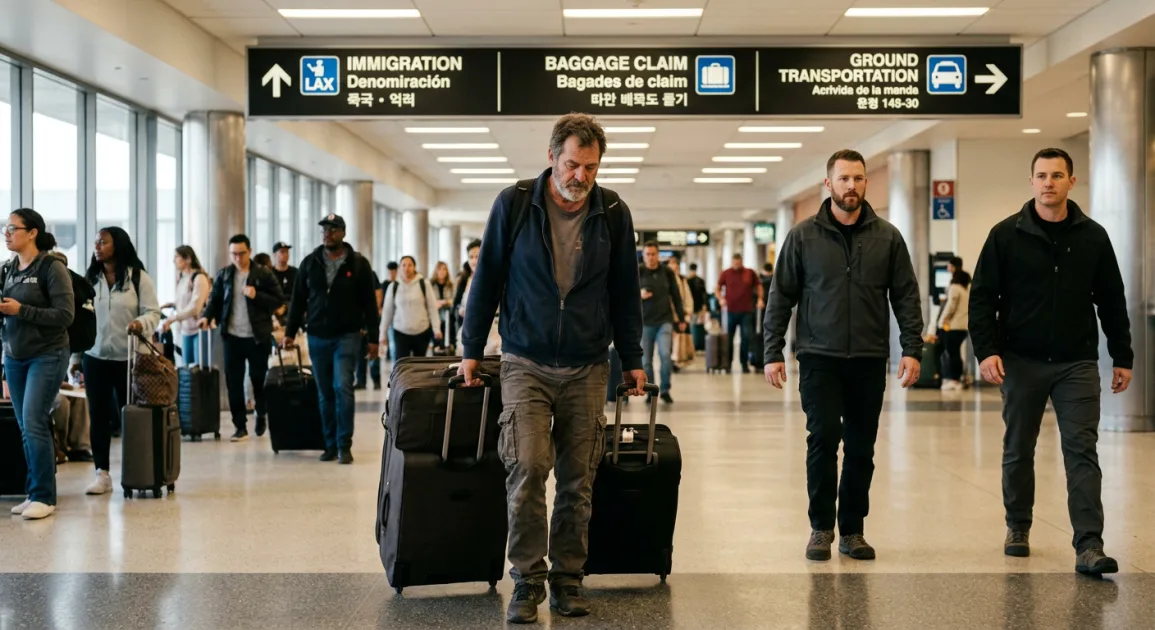
The moment the wheels of the United Airlines flight touched down at Los Angeles International Airport, James Kowalski believed the hardest part was behind him. He had quietly closed his Bangkok bank accounts, packed everything he owned into two suitcases, and boarded a one way flight back to the United States carrying documentation for nearly $1.8 million in Thai Government Lottery winnings that he had never reported to the Internal Revenue Service across four consecutive tax years. What he did not know — could not have known — was that two IRS Criminal Investigation special agents and a Homeland Security Investigations officer were standing at the international arrivals gate waiting specifically for him to land.
Kowalski's case began unraveling eighteen months before his flight home. His Bangkok bank, operating under its FATCA compliance obligations, had flagged his account for mandatory reporting to the IRS after the balance crossed a threshold that triggered enhanced due diligence requirements under Thai anti-money laundering regulations. The FATCA report generated by the bank identified Kowalski as a US citizen holding a Thai account with a balance significantly inconsistent with the foreign income he had reported on his federal tax returns. An IRS international enforcement analyst cross referenced the FATCA data against four years of his federal returns within days of receiving the report. The discrepancy was immediate and enormous. A Criminal Investigation referral was opened the same week.
What Kowalski never understood was that closing his Thai bank accounts and returning to the United States did not reset his legal exposure. It accelerated it. IRS Criminal Investigation agents working international tax evasion cases routinely coordinate with Customs and Border Protection and Homeland Security Investigations to monitor the travel movements of subjects under active investigation. The moment Kowalski's passport was scanned at LAX immigration, an automatic alert triggered by his status as an active IRS Criminal Investigation subject notified the waiting federal agents that their target had just landed on American soil.
Trump administration raises demolition threat as legal battle over renaming heats up
WASHINGTON — The Trump administration warned in a court filing Tuesday that the Kennedy Center could face demolition if a federal judge issues an order permanently blocking President Trump's push to renovate the facility.
In an extraordinary filing, Brantley Mayers — a top official in the DOJ's Civil Division — argues the "decrepit" Kennedy Center faces an imminent "death spiral" without Trump's intervention. DOJ attorneys called the Kennedy Center "structurally unsound, fundamentally unsafe, and embarrassing to the Nation's Capital."
The filing warned that without Trump's efforts, "the Center will deteriorate further into an unsafe, decrepit structure that will be required to be taken down," suggesting th...
The airport encounter was not an arrest. Federal agents approached Kowalski in the international arrivals hall, identified themselves, and requested that he accompany them to a private CBP interview room. Everything he said in that room without legal representation present was recorded and subsequently used in building the federal prosecution case against him. His attorney later described the airport interview as the single most damaging element of the entire federal case — not because of what investigators found, but because of what Kowalski voluntarily told them before understanding that he had the absolute right to remain silent and demand legal counsel immediately.
Federal prosecutors ultimately charged Kowalski with four counts of willful failure to file FBAR reports, four counts of filing false federal tax returns, and one count of attempted tax evasion. His defense attorneys negotiated a plea agreement that significantly reduced his sentencing exposure in exchange for full financial disclosure and cooperation. He was ultimately sentenced to 18 months in federal prison, three years of supervised release, and ordered to pay restitution of $680,000 in back taxes, penalties, and interest — consuming more than a third of his total Thai lottery winnings.
Federal tax defense attorneys who followed the case say its most important lesson has nothing to do with airports or international travel. The lesson is that IRS Criminal Investigation cases involving unreported foreign lottery income are built quietly and methodically over months or years before the subject ever knows they are under investigation. By the time most expats realize the IRS is watching, the evidence against them is already overwhelming. The only moment when qualified legal intervention can dramatically change the outcome is before federal agents make their first contact — not after they are already waiting at the gate.
Disclaimer: This article is for general informational purposes only and does not constitute legal or tax advice. The case details described are illustrative in nature. Readers should consult a licensed federal tax defense attorney regarding their specific situation.